Your Monthly Market & Investment Update
April 1, 2026 | Issue #2
April tends to bring two things into focus at the same time: taxes and headlines. One asks us to look backward at what happened last year. The other tries to convince us to react to what might happen next. Both can create stress if we let them.
That’s why this month, we’re focusing on clarity over noise—staying grounded in long-term discipline, understanding what mattered in the markets during March, and looking at one tax concept that can make a real difference over time.
🌿Quote of the Month
“It’s not what you earn, but what you keep—and how intentionally you keep it—that shapes long-term wealth.”
📈What Happened in the Markets This Month (In Plain English)
March was a reminder that markets do not need to be dramatic to be distracting. Investors spent much of the month weighing slower economic growth, inflation concerns, and higher energy prices. That combination kept sentiment cautious, but it did not change the core reality that uncertainty is always part of investing.
In plain English: March did not deliver a clean all-good or all-bad story. It delivered mixed signals. Some business data showed growth continuing, though at a slower pace, while inflation worries remained in the background. Ongoing conflict involving Iran also added to uncertainty, particularly through energy prices and global supply concerns. For long-term investors, that is not a signal to abandon a plan. It is a reminder that disciplined investing matters most when the news feels unsettled.
🧾The Tax Insight Most People Miss: Is a Big Refund Actually a Win?
A tax refund can feel like a victory—but in many cases, it simply means you gave the government more during the year than you needed to. That may feel reassuring in April, but it is still worth asking a better question:
Would that cash have been more useful working for you throughout the year?
This is where tax planning becomes more interesting than most people expect. A large refund is not always evidence of a great strategy. Sometimes it is just evidence that your withholding was too high. More intentional withholding may create better monthly cash flow, more flexibility, and more room for saving or investing during the year instead of waiting for a refund check.
Tax season is also a good time to review whether your paycheck withholding still matches your current situation. Life changes, income changes, and even retirement distributions can all affect whether too much—or too little—is being withheld.
Interesting tax reminder: The first estimated tax payment deadline of the year is a helpful reminder that proactive planning often matters more than last-minute filing. A little intentionality now can reduce surprises later.
🧭Tip of the Month
Stay the course. Long-term success rarely comes from constant adjustment. Investors are often tempted to respond to every new development as if it demands action, but most lasting wealth is built through discipline, not prediction. A thoughtful plan should already account for uncertainty, volatility, and headlines. Staying the course is not passive—it is often the most active form of wisdom.
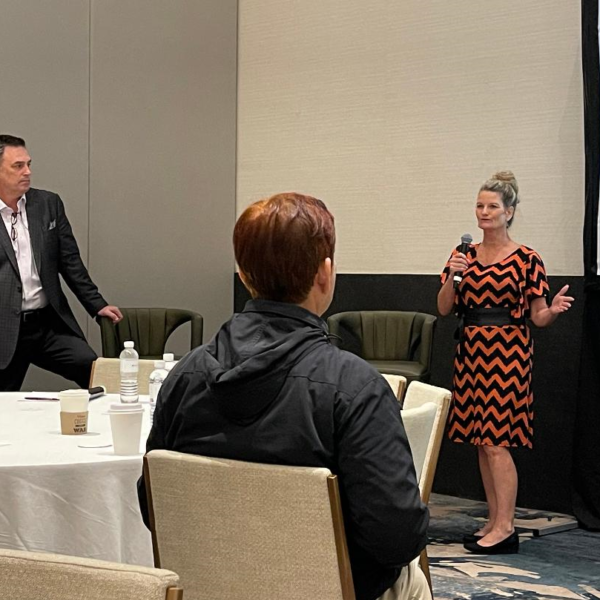
Upcoming Workshop
Dismantling Myths of Investing
Wednesday, April 8th at 6:00 PM
9633 S. 48th St. #130, Phoenix, AZ
Some of the most widely believed ideas in investing are also the most damaging. Join us for an engaging conversation as we break down common myths, challenge conventional thinking, and replace confusion with evidence-based principles designed to support long-term success.
RSVP by Monday, April 6th to Yvette Miller at 480.805.0970.
Disclosure:
Advisory services offered through Unique Investment Advisors, LLC, an Investment Advisor in the State of Arizona, California,
Wisconsin and Tennessee. Insurance products and services are offered through Unique Business Planning, LLC, an affiliated
company. All content is for information purposes only and should in no way be construed or interpreted as a solicitation to sell or
offer to sell advisory services to any residents where it is not appropriately registered, excluded or exempted from registration or
where otherwise legally permitted. It is also not intended to provide any tax or legal advice or provide the basis for any financial
decisions. Nor is it intended to be a projection of current or future performance or indication of future results. Moreover, this material
has been derived from sources believed to be reliable but is not guaranteed as to accuracy and completeness and does not purport
to be a complete analysis of the materials discussed. Investing always involves risk and possible loss of capital.